The written word was always very important in our household.
Por LEONARDO TABÁREZ
EL NUEVO SOL
Intro: Welcome to Radio Nepantla: La voz que traspasa fronteras, a podcast from El Nuevo Sol, the multimedia site of the Spanish-language journalism program at California State University, Northridge.
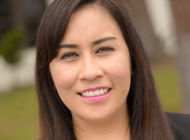
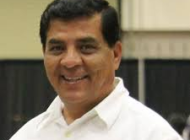
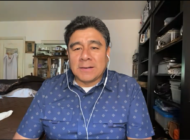
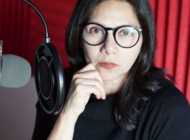
Leonardo Tabárez: Hello, my name is Leonardo Tabarez, and today I’m joined by Abelardo de la Peña Jr., a local journalist from the Los Angeles area. Today, we’ll be talking about his journey into journalism and his experience in the field. Can you tell us a little bit about your work that has included print and online journalism, public relations, and marketing communications? So my first question for you is: what inspired you to pursue this profession and why?
Abelardo de la Peña Jr.: Sure. I’ve been a lifelong reader. When I was attending community college, I was reading the student newspaper. Thiswas at Los Angeles Harbor College, a two-year community college. I was looking at the student newspaper called The Tides, and I saw some really sloppy writing and articles that just weren’t written very well. I said to the person next to me, “This really does not look good.” They responded, “Well, if you think you can do better, go ahead and try.” It turned out she was on the newspaper staff. The next semester I took a journalism class. I didn’t complete it at first, but I tried again the following semester. Eventually, I went from staff writer to news editor, then editor-in-chief, and finally photography editor. From there, my career expanded into communications and photography — including news photography, fine art photography, and portraits.
Leonardo Tabárez: How did your upbringing or culture affect your work?
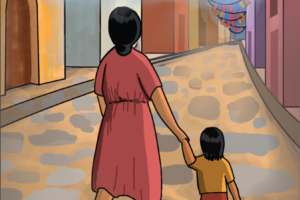
Abelardo de la Peña Jr.: I grew up in a Mexican household. My parents were immigrants from Mexico, so at home we spoke Spanish and learned how to read and write in Spanish. At the same time, my dad subscribed to English-language newspapers like the Herald Examiner and magazines like Life Magazine, which helped me stay connected to news and features in English. He also made sure we had books at home. The written word was always very important in our household. My father started as a laborer in the United States, but he eventually earned a column in a local weekly newspaper. It was a Spanish-language column in an English-language paper. That was a big inspiration for me.
Leonardo Tabárez: That’s awesome. So your dad was involved in communication too.
Abelardo de la Peña Jr.: Yeah, and later in life he worked different jobs, but he always kept that passion. Even after retirement, he wrote several self-published books.
Leonardo Tabárez: What would you say has been one of the most impactful moments in your career?
Abelardo de la Peña Jr.: One of the most impactful moments happened in the late 1990s when I noticed Latino media was primarily in Spanish. I speak Spanish, but I realized there was a gap for English-speaking Latinos who still wanted media that reflected their communities. At the time, I was an avid reader of the LA Weekly, which was a free newspaper with articles, event listings, and underground-style content. I wanted to create something similar for English-speaking Latinos. At first, I thought about creating a print publication, but I realized it was too expensive.
Then someone suggested creating a website. At the time, there was a service called EarthLink that gave users website space and templates if they subscribed to email services. I first started by sending newsletters with short stories about what was happening in the Latino community, along with event listings. It grew from just a few contacts I had to around 500 subscribers. Eventually, with a few other people, I founded LatinoLA.com. The site had success, and I kept it running for over 20 years until it became unsustainable because of costs and changing technology. It was completely self-funded or supported through advertising. That experience also opened doors for me professionally. I worked as a director of communications and marketing, worked in community outreach for Health Net during the rollout of Covered California, and worked for marketing communications companies. That entire experience eventually led me to working with CALÓ News.
Leonardo Tabárez: You’ve been working in this profession for over 20 years. What are some of the biggest changes you’ve noticed from before compared to now?
Abelardo de la Peña Jr.: Now I see a lot more hyperlocal media outlets, especially in Latino media spaces. You have outlets like Boyle Heights Beat and Remezcla that focus on specific communities, interests, and geographic regions. The barrier to entry is much lower now. People can start blogs, websites, and build audiences through TikTok, Facebook, and Instagram. There are also more nonprofit media models now. Organizations like L.A. Public Press and CALÓ News sustain themselves through memberships, grants, and donations instead of relying solely on advertising revenue. It’s much easier today to launch a media platform and help it grow.
Leonardo Tabárez: You said LatinoLA.com was difficult to sustain, but you still kept it running for over 20 years. Why did you continue?
Abelardo de la Peña Jr.: At the time, it was considered a user-generated website. We didn’t have a staff. Everything published on the site came from community members. People submitted feature articles, short stories, opinions, editorials, and poetry. For me as the editor, my job was reviewing submissions, making sure they were publishable, and doing light edits. I tried to refresh the website daily. It usually took me about one to two hours a day to review both article submissions and event listings. There was still interest in the platform, but eventually people moved toward websites with more advanced technology. We couldn’t host videos or music content. We could only link content, which became outdated over time. Eventually, the technology completely broke down and I could no longer post updates. That was the end of the platform.
Leonardo Tabárez: What advice would you give to an up-and-coming Latino journalist?
Abelardo de la Peña Jr.: First, develop strong writing and communication skills because journalism today isn’t just text-based anymore. A lot of modern journalism includes video and short-form content. You should understand video editing and know how to conduct interviews. Going to school can help, especially if your school gives you hands-on opportunities to practice those skills. But beyond that, start submitting your work to publications. You may not get paid right away, but you’ll gain experience and receive valuable feedback. Editors can help you improve your writing and reporting. My biggest advice is to keep practicing, keep refining your skills, and keep trying to get your work published wherever you can.
Outro: Thanks for listening to Radio Nepantla: La voz que traspasa fronteras. We invite you to listen to the next episode and visit our website, ElNuevoSol.net. This was a production of El Nuevo Sol, the Spanish-language multimedia project at California State University, Northridge. Music by Alex Bendaña. See you next time.
Tags: Abelardo de la Peña Jr. Periodismo latino