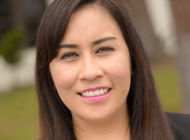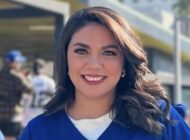
Masked men were just taking people off the street. It was very, very difficult to report on. —Ryanne Mena, immigration reporter for the Southern California News Group.
Por ALAN LEYVA
EL NUEVO SOL
Intro: Welcome to Radio Nepantla: La voz que traspasa fronteras, a podcast from El Nuevo Sol, the multimedia site of the Spanish-language journalism program at California State University, Northridge.
Alan Leyva: For many journalists, the path into reporting starts with curiosity. But for one reporter in Los Angeles, it started with family.
Ryanne Mena: So I am a proud granddaughter of Mexican immigrants who was born and raised in LA, a city of immigrants. And that translated directly into the topics that I seek to cover, or that I now cover, one of which is immigration.
As a granddaughter of Mexican immigrants, immigration is very personal and important to me, and it’s the beat I like covering the most.
When I was little, I actually wanted to be a paleontologist. That was something I wanted to be from, like, I don’t know, age three to nine or ten maybe. But I didn’t really realize what journalism was. Of course, I watched the news with my parents, but I didn’t realize journalism was that until I was in community college.
That’s when I realized I wanted to do journalism.
I first became very interested in immigration reporting during Trump 1.0. That’s actually when I realized I wanted to do journalism for the rest of my life. In late 2018 to early 2019, I was down in Tijuana covering migrant caravans arriving from Central America and trying to seek asylum in the United States.
Alan Leyva: That personal connection soon turned into firsthand experience, reporting at the border during the first Trump administration — what ultimately shaped the kind of journalist she wanted to become.
Ryanne Mena: Seeing it for yourself and seeing these issues with your own eyes, and talking to people who were part of these caravans and were being directly impacted by the policies the first Trump administration was enacting, was a whole other level of understanding and bearing witness.
So yeah, that’s when my desire for immigration reporting came to be and really solidified.
Alan Leyva: Years later, the same commitment to immigration reporting would place her directly in the middle of unrest here in Los Angeles.
Ryanne Mena: It was really tough to see how our community was being attacked. It felt like Los Angeles was under occupation beginning in June, with militarized federal immigration agents on the streets of downtown LA and other parts of the city.
Masked men were just taking people off the street. It was very, very difficult to report on.
On day one and day two of the raids, I was injured by federal immigration agents while I was doing my job as a journalist reporting on the anti-ICE protests that resulted from the raids. That was really difficult and made me angry, of course, because I was just doing my job and I got injured by the government.
It was really difficult for me because it took me out of the field and left me feeling very emotional. But I used that experience to fuel my reporting instead of stopping me.
Although it did take me out of the field for several days, it fueled my desire to continue immigration reporting because that wasn’t going to stop me.
June and July were very difficult months for a lot of people, not just myself.
Alan Leyva: Even after being injured while reporting, she continued covering the stories of immigrants and detainees — work that eventually connected her with people inside one of the largest ICE detention centers in California.
Ryanne Mena: That video I showed during the panel a couple weeks ago featured a man named Jose Mauro Salazar Garza, who appeared in one of my recent stories about conditions inside the Adelanto ICE Processing Center, one of California’s largest immigration detention centers.
The video showed him holding up his right pinky, the tip of which had been bitten off by another detained man while he was in detention. He’s been there for about three years at this point, and he’s doing everything he can — exercising all his legal options — to regain his freedom and avoid being separated even further from his family.
How I got into contact with him is kind of a long story, but the short version is that I met someone outside of a car wash in Koreatown that had just been raided by federal immigration agents.
I was talking to people there, and this guy pulled up on a bike and asked, “What’s going on?” I explained the situation, and he said, “Oh, I have a friend who’s in ICE detention.”
I said, “Really?”
And he said, “Yeah, do you want to talk to him?”
And I said, “Absolutely.”
So he connected me with his friend, who became my first contact inside Adelanto. From there, my network inside the detention center grew because I kept asking if he knew anyone else in his unit who would be willing to talk to me.
That led to me getting handwritten letters from 10 different people detained inside Adelanto, which helped me understand the conditions there.
Alan Leyva: What began as an encounter outside of a Koreatown car wash opened the door to a much larger investigation into conditions inside Adelanto.
Ryanne Mena: I’ll certainly be continuing my reporting on the Adelanto ICE Processing Center. I think it’s really important for journalists to shine a light into these facilities because they operate with so little transparency.
It’s so difficult for members of the media and the public to find out what’s happening inside, and I think it’s important to center the people directly impacted by those detention centers — the people detained inside, along with their families and loved ones.
There needs to be more reporting on these detention centers, and that’s something I’ll continue doing. I hope other journalists continue that work as well.
Outro: Thanks for listening to Radio Nepantla: La voz que traspasa fronteras. We invite you to listen to the next episode and visit our website, ElNuevoSol.net. This was a production of El Nuevo Sol, the Spanish-language multimedia project at California State University, Northridge. Music by Alex Bendaña. See you next time.
Tags: journalism voices Periodismo latino Ryanne Mena Voces del Periodismo